
by Wendy Wright, LMFT, Financial Therapist, Money Coach, and Money Story Specialist™
Founder of the Wendy Wright Financial Therapy Approach™ | Creator of the 10 Principles of Financial Therapy©
Have you ever found yourself thinking:
“Why do I keep doing this with money?”
Maybe you avoid checking your bank account even when you know you should. Maybe you feel guilt after spending money on yourself. Maybe you tell yourself you’re going to change your habits, only to find yourself back in the same patterns weeks or months later.
If any of that feels familiar, I want you to know something:
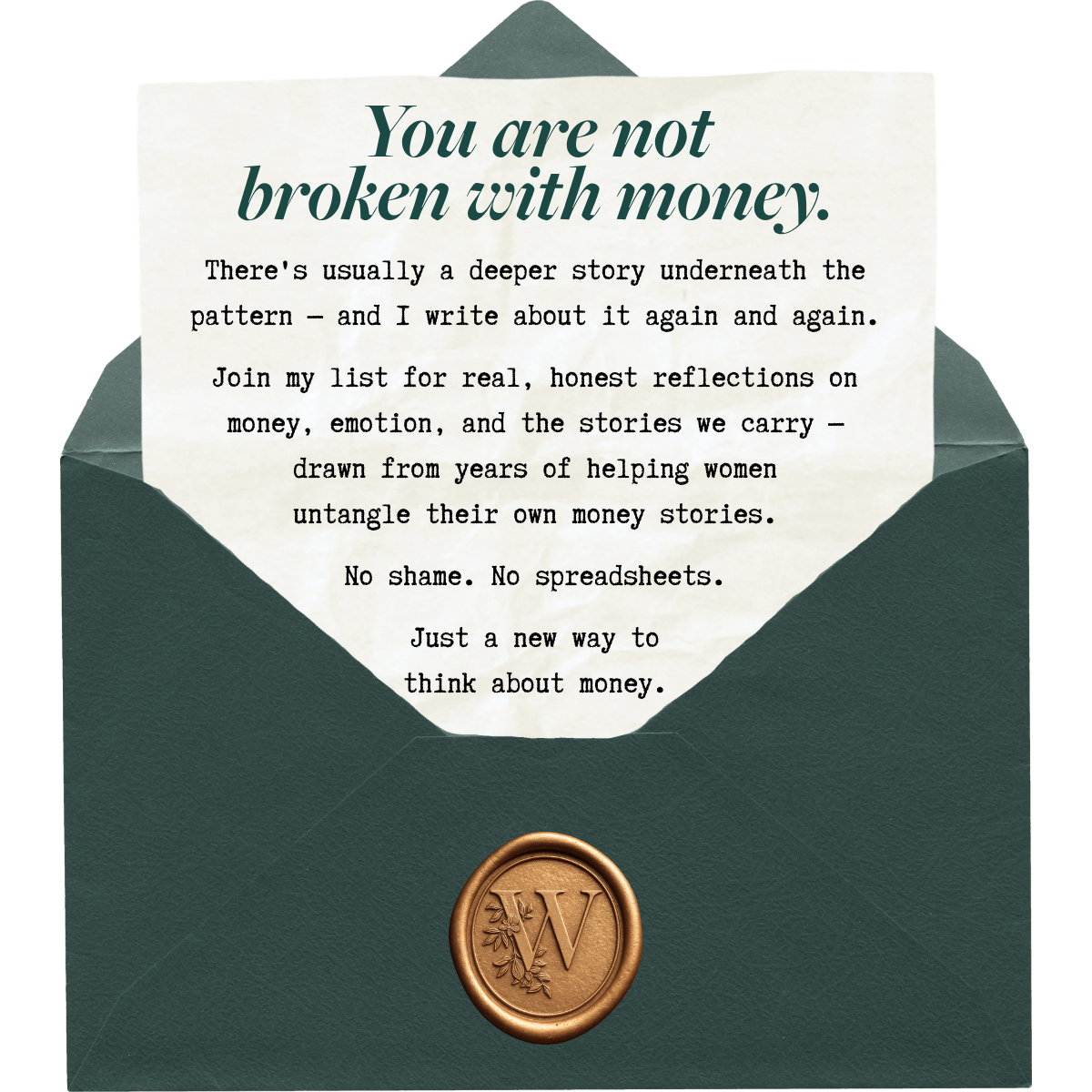
You are not broken.
You’re not failing.
One of the things I’ve learned over many years of working with people is that money behaviors often make much more sense than we initially realize. The patterns that frustrate us the most are often connected to something deeper.
And yes — your relationship with money can heal.
Money Is Rarely Just About Money
Many people believe money problems are simply about discipline, knowledge, budgeting, or willpower.
If that were true, most people would read a book, create a plan, and never struggle again.
But that usually isn’t what happens.
Money often becomes connected to things like:
- Safety
- Security
- Self-worth
- Fear
- Belonging
- Identity
- Family experiences
- Past hurts
- Shame
- Uncertainty
Through my Wendy Wright Financial Therapy Approach™, I help people understand that financial struggles are often about much more than numbers on a spreadsheet.
Together, we explore the beliefs, emotions, experiences, and patterns beneath financial behaviors so that lasting change becomes possible.
I’ve Seen This Personally and Professionally
One thing I want you to know is that I don’t approach this only from a professional perspective.
I’ve also experienced the emotional weight that money can carry.
I’ve seen firsthand — both personally and professionally — how fear, uncertainty, shame, and old beliefs can quietly shape our decisions.
Part of why I developed my Wendy Wright Financial Therapy Approach™ was because I wanted a different path. I wanted an approach rooted in compassion, curiosity, and sustainable change rather than judgment or pressure.
Because beating ourselves up rarely creates lasting change.
Understanding ourselves often does.
Step One: Practice Abundant Compassionate Curiosity and Zero Judgment
This is one of the 10 Principles of Financial Therapy© and something I return to often. [The 10 Principles of Financial Therapy© are a framework I created to help you understand what Financial Therapy is and how it can help you.]
When you notice financial behaviors you don’t like, how often has your immediate response been:
“What’s wrong with me?”
But what if we replaced that question with:
“I wonder what this behavior has been trying to do for me?”
Instead of criticism, we become curious.
Instead of shame, we become compassionate.
Instead of assuming failure, we begin gathering information.
Curiosity creates space for understanding.
And understanding creates space for change.
Step Two: Let Go of “Good” and “Bad”
Many of us learned to see money through extremes.
Good spender.
Bad spender.
Responsible.
Irresponsible.
Successful.
Failure.
But life and people are rarely that simple.
Money behaviors often develop for reasons that once made sense.
Perhaps overspending became comfort.
Perhaps avoiding finances became protection from anxiety.
Perhaps scarcity became a way of creating safety.
When we stop labeling ourselves and start understanding ourselves, something shifts.
We move from shame toward awareness.
And awareness creates possibilities.
Healing Your Relationship With Money Doesn’t Mean Perfection
Healing does not mean:
- Never feeling anxious about money
- Always making perfect financial decisions
- Never making mistakes
- Following every financial rule
Healing often looks more like:
- Feeling less shame
- Understanding your patterns
- Making choices with greater awareness
- Feeling more peace around money
- Creating new habits that align with your values
Small shifts often create larger changes over time.
Reflection Questions
You may want to spend a few minutes reflecting on these questions:
- What messages about money did I hear growing up?
- What emotions come up when I think about money?
- What financial behaviors frustrate me most?
- What might these behaviors be trying to protect me from?
- What would change if I approached myself with curiosity instead of judgment?
Sometimes the answers can surprise us.
Questions People Ask About Their Relationship With Money
Yes. Healing your relationship with money doesn’t mean becoming perfect with finances. It often means understanding patterns, reducing shame, and creating healthier ways of relating to money and yourself.
Money often becomes connected to safety, identity, self-worth, belonging, and past experiences. For many people, financial stress isn’t simply about numbers.
Some common signs include:
- Avoiding financial conversations
- Anxiety around spending
- Shame around debt
- Difficulty making decisions
- Feeling “bad with money”
- Feeling stuck despite understanding financial basics
The Wendy Wright Financial Therapy Approach™ combines emotional understanding with practical tools to help uncover deeper money patterns and create sustainable change.